
Late last week, multiple outlets reported the seizure of $1 billion worth of crypto from the Iranian government.
Fox Business wrote:
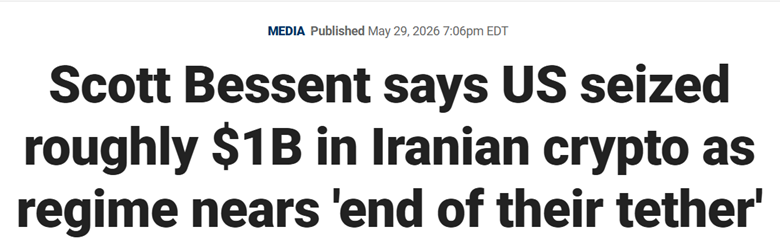
The “end of their tether” line is a bit on the nose, as it appears that most/all of the crypto funds seized were USDT stablecoins – a Tether product.
Stablecoins are a specific type of crypto that is supposed to simply be a digital, crypto version backed 1:1 by a given asset. In this case: U.S. dollars.
The benefit: you can transfer digital dollars from the global banking system into the USDT and then very quickly move vast sums to other wallets, or buy other cryptos or stablecoins.
The downside is apparently this type of crypto is not really outside of the reach of the control of the U.S. government.
You might remember that once upon a time, the whole point of cryptocurrency was to have a form of money outside of the control of traditional central banking – an independent money, for the individual.
Whoops.
For years, we’ve heard rumors and preliminary plans to create what’s called a Central Bank Digital Currency (CBDC) which would be a kind of stablecoin owned and controlled by the government.
This kind of money could be micromanaged to an insane degree, allowing central banks to have very granular control over who can buy what, how much, and when. Maybe your fitbit rats you out that you’re gaining weight. The CBDC could be programmed to stop you from buying ice cream.
Wars have been fought for less.
But I think we just found out that many/most/all of the existing stablecoins are already within control of central banks.
In other words, we already have CBDCs! Why would the U.S. government go through all of the legwork of making a new one and forcing/enticing people into an official US govt CBDC when they can just swoop in and do what they want with existing stablecoins?
Like a roach motel, Iranian authorities thought that USDT was a safe, secure way to hold dollars, or to transact in dollars. They funneled money into these coins, only to discover that they can’t check out.

Over the past month or so, the U.S. government has been working with stablecoin issuers to simply swipe wallets from the Iranians.
The payday is $1 billion, which I guess sounds like a tidy sum, but you have to consider that the war with Iran has cost US taxpayers about $33 billion and counting.
They didn’t catch very many roaches – and in the meantime, everyone just found out that stablecoins are not very secure, and if you find yourself running afoul of the U.S. government, they can (and will) just swipe your funds.
What are you going to do about it?
To be clear, we have no evidence that the U.S. has a similar ability to steal wallets or funds from other cryptocurrencies like Bitcoin or Ethereum – yet.
But the takeaway for investors (globally and domestically) is that if you really, really want to make sure you own an asset outside of the control of the U.S. government, gold is increasingly looking like the last man standing.
Own dollars and see your savings wiped out by purposeful devaluation.
Own other global currencies and you’ll have about the same experience.
Put it in a bank and you earn peanuts on your deposit accounts.
Buy a stablecoin and maybe your wallet simply gets wiped clean.
Maybe even the same is true of the “good” cryptos like BTC or Ether. Who knows?
But with gold? There’s no counterparty to worry about. There’s no backdoor secret entrance that drains your gold out of your safe.
More people are going to be cornered into this realization – especially if we see more stories about the U.S. government’s humblebragging about seizing crypto…
Best,
Garrett Goggin, CFA, CMT
Lead Analyst and Founder, Golden Portfolio